

 24 Hours
 (In-Stock)

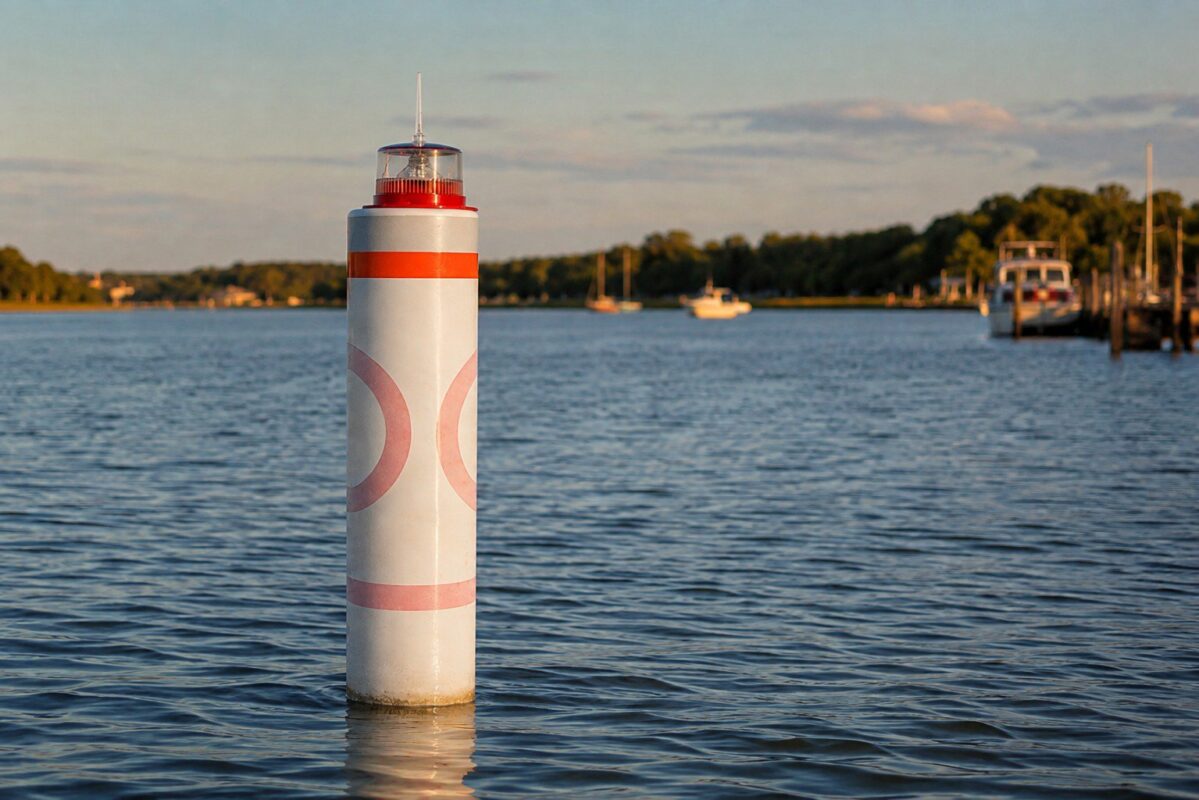
Regulatory and channel buoys gain nighttime visibility through marine solar lights mounted on top. A solar panel automatically charges an internal battery each day during daylight hours. Stored power then runs an LED signal through the night without external wiring.
Agencies add these lights when a buoy needs nighttime visibility beyond daytime color and shape. Boaters navigating after dark rely on a flashing signal to confirm a marker's position. The guide covers how marine solar lights work and how to choose the right one.
How Do Marine Solar Lights Extend Visibility for Buoys?
A bright LED signal, powered by marine solar lights, flashes automatically from dusk until dawn. A solar panel charges an internal battery during the day, powering the light overnight without hardwiring. Mounted on a regulatory or channel buoy, the light makes the marker visible long after sunset.
Why Marine Solar Lights Matter for Regulatory Buoys
A daytime-only marker becomes visible at night once you add marine solar lights. Federal and state agencies often require lighted markers on higher-traffic waterways today. Adding a solar light completely closes the visibility gap between sunset and sunrise.
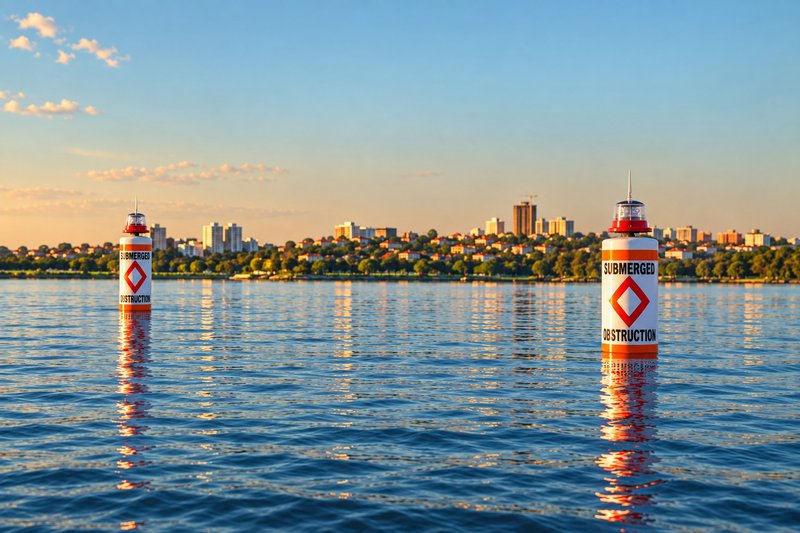
However, commercial shipping lanes depend on lighted buoys to guide large vessels safely at night. A missed or dark marker increases collision risk for boats moving after dusk. Hydro facilities and dams often require lighted markers near restricted or hazardous areas.
Search and rescue teams rely on lighted markers to navigate during nighttime emergencies. Therefore, a dark or failed light can slow a rescue response when minutes matter most.
Retrofitting an existing buoy with a solar light often costs less than a full replacement. A manufacturer can add a light cage to markers already deployed in the field. As a result, extending visibility this way protects both boaters and the agency'scompliance record.
How Solar Navigation Lights Work After Dark
Solar navigation lights use a small photovoltaic panel mounted on top of the buoy. Sunlight charges an internal battery throughout the day, even under light cloud cover. A built-in photocell senses darkness and switches the LED on automatically each evening.
Meanwhile, flash patterns vary by buoy class and the marker's daymark color. Green lights flash in a set pattern that matches the buoy's daytime meaning. Red lights follow their own pattern so boaters read the signal correctly at night.
Notably, battery capacity determines how many consecutive cloudy days a light can keep operating. Most marine solar lights hold enough battery charge to survive several days without direct sun. A larger battery pack extends runtime for buoys installed in cloudy northern regions.
Visibility range depends on LED brightness and lens design in marine solar lights, often reaching several nautical miles. Therefore, choosing the correct range matters most on wide channels or open water crossings.
Choosing the Right Buoy Lighting for Your Waterway
Buoy lighting needs vary depending on traffic volume, waterway width, and local weather. Meanwhile, a buyer should match light output, battery size, and mounting style to the site. The factors below cover what to check before ordering marine solar lights for your buoys.
- Confirm the visibility range required for your waterway width and vessel traffic type.
- Match the flash color and pattern exactly to the buoy's existing daymark classification.
- Check battery capacity against your region's typical cloud cover and daylight hours each season.
- Ask whether the light cage protects against ice, debris, and repeated boat strikes.
- Confirm the mounting style fits your existing buoy or a new custom order.
- Ask about warranty terms and replacement parts for the light and battery pack.
Matching these factors keeps marine solar lights reliable through every season on your waterway. Therefore, a manufacturer who reviews your site conditions helps you avoid an underpowered light.
What to Look for in a Durable Solar Light
Salt spray, UV exposure, and constant wave motion test even durable marine solar lights. Similarly, weatherproof housing keeps water out of the electronics through many years of service.
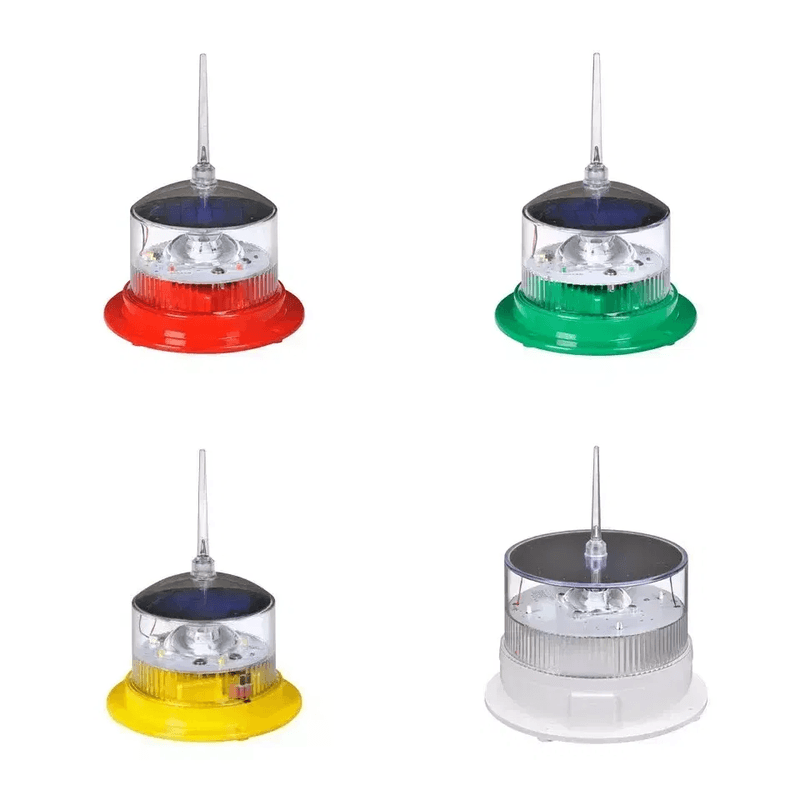
However, a sealed lens resists fogging and cracking under repeated sun and cold exposure. Impact-resistant housing protects the light from boat strikes and floating debris impacts. Using marine-grade components prevents corrosion on all exposed metal parts.
Notably, battery life matters as much as the light itself over years of service. Ask how long the battery lasts before it needs full replacement or service. A replaceable battery design saves money compared to replacing the entire light unit.
Ask a manufacturer whether the light ships pre-installed or as a retrofit kit. A pre-installed marine solar light saves valuable labor time during your initial buoy installation. Consequently, a retrofit kit works well for agencies upgrading buoys already deployed on the water.
Add Marine Solar Lights to Your Next Buoy Order
Regulatory and channel buoys stay visible well after sunset with marine solar lights installed. Walsh Marine builds and mounts these lights directly at our facility in Wisconsin. Weatherproof housing and marine-grade components keep the light reliable through every season.
Whether you need a retrofit kit or a light mounted on a new order, we can help. Our team reviews your waterway conditions and responds to quotes within twenty-four hours. Ask our team today about adding marine solar lights to your next order.