

 24 Hours
 (In-Stock)

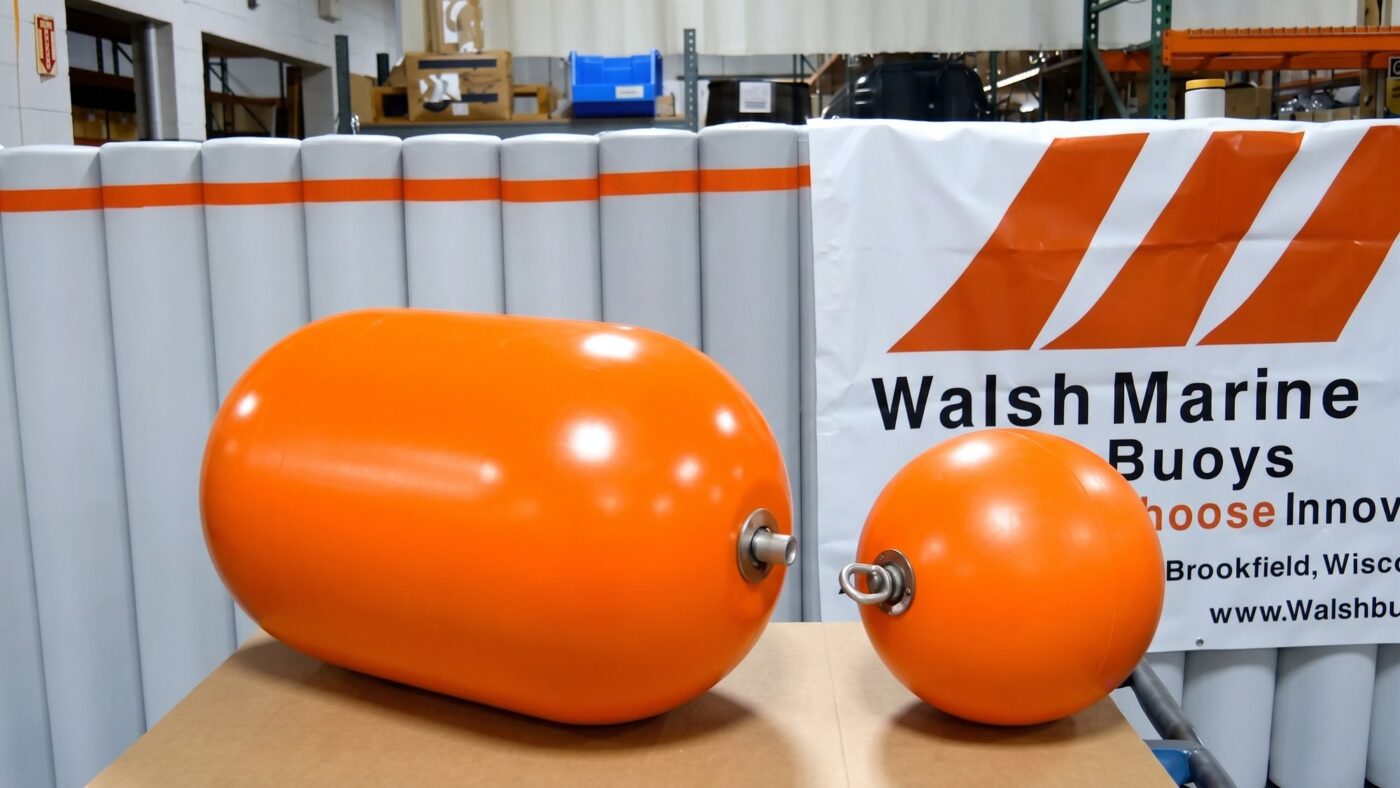
Every buoy manufacturer talks about quality, but the real story lives in the manufacturing process itself. How the resin is chosen, how the mold spins, how the foam fills, and how the graphics get applied all shape whether a buoy survives one season or twenty. Marina operators, lake associations, and government buyers who understand the process buy smarter and get better long-term value.
Domestic manufacturing gives you direct visibility into each of those steps, which overseas suppliers rarely provide. Watching how rotationally molded buoys are actually made reveals why some brands outlast the competition by a full decade. Understanding what happens inside the plant helps you spec better equipment and avoid the false economies that plague cheap imports.
What Makes a Long-Lasting Buoy Manufacturer Process?
A long-lasting buoy manufacturing process starts with high-density polyethylene resin, seamless rotational molding, closed-cell foam fill, and permanent vinyl graphics. Each step targets the failure points that shorten a cheap buoy's life, from seam leakage to graphic fading to chemical degradation. HDPE buoys built with this method routinely outlast ABS or seamed alternatives by many seasons in harsh marine conditions.
Why HDPE Buoys Outperform ABS in Marine Environments
Resin choice sets the ceiling on how long any buoy will last, and the marine environment punishes weak materials fast. HDPE buoys resist petrochemicals, waterborne pollutants, and ultraviolet exposure that break down cheaper plastics within a few seasons. Choosing HDPE at the resin stage locks in years of extra service life before the mold even spins.

ABS plastic offers a lower upfront price for a buoy manufacturer, but the tradeoff shows up quickly under real conditions. Rigid ABS shells crack when struck by a boat, snowmobile, or floating debris that HDPE would flex and absorb. Every crack becomes a water intrusion point that compromises buoyancy and accelerates further failure.
Chemical resistance also matters more than most buyers realize until it fails them. HDPE tolerates fuel spills, cleaning agents, and algae treatments that visibly degrade ABS over time.
Ultraviolet stability rounds out the resin case for any high-quality buoy manufacturer. HDPE holds color and structural integrity through years of direct sun exposure that fade and embrittle ABS. Domestic producers who spec pollution-resistant HDPE resin build in a durability floor that overseas imports rarely match.
How Rotationally Molded Buoys Get Their Seamless Strength
Rotationally molded buoys are formed inside a heated mold that rotates on two perpendicular axes as the resin melts and coats the interior. The process produces a single continuous shell with no seams, caps, or joints where water intrusion typically begins. Seamless construction is the structural advantage that separates long-life buoys from the seamed imports crowding the low end of the market.
Rotational molding also produces even wall thickness throughout the shell, which distributes impact loads across the entire surface. When a boat strikes a molded buoy, the shell flexes and rebounds rather than concentrating stress at a weak joint. That physics keeps the buoy intact through collisions that would shatter a two-piece assembly.
The absence of caps eliminates the most common failure mode in cheaper products. Consequently, water cannot seep past a sealed lid, saturate the interior, or freeze and crack the shell during a winter storage cycle. Field service life extends dramatically once you remove the caps-and-seams failure vector from the equation.
Building buoys this way requires the right process discipline from any serious buoy manufacturer. Mold temperature, rotation speed, and cure time all shape wall thickness and surface finish on every unit. Our Tough Seal method applies these controls to produce the leak-proof, seamless shell that defines the finished product.
What Foam Fill, Hardware, and Vinyl Graphics Add to a Buoy Manufacturer's Build
Foam fill turns a hollow shell into a buoy that keeps floating even after impact damage. Closed-cell polyurethane foam displaces air with structural material, so a boat strike that punctures the shell no longer sinks the marker. Any serious buoy manufacturer specifies 100% foam fill on regulatory and mooring products where failure is not an option.
Hardware selection matches the water conditions and vessel loads the buoy will actually face. Stainless steel handles saltwater and brackish environments, galvanized steel covers most freshwater applications, and PVC-coated fittings work in shallow residential settings.
Vinyl graphics replace screen printing for a reason that shows up two seasons after installation. Permanent vinyl markings resist ultraviolet fading, waterline abrasion, and chemical exposure that dissolves screen print inks. Regulatory language stays legible for years, which keeps your markers legally effective without repainting or restenciling.
Finishing details also determine how the buoy performs against real inspection standards. Reflective elements, correct color match, and consistent lettering all matter when a state warden checks compliance.
Quality Control and Domestic Oversight in a Trusted Buoy Manufacturer
Quality control lives inside the plant, not on a spec sheet mailed after the fact. Every mold cycle, resin batch, and finishing station carries a checkpoint that catches defects before shipping. Domestic oversight lets a buoy manufacturer own that discipline directly instead of trusting a subcontractor half a world away.
Domestic manufacturing also produces documentation your inspector will actually accept during a compliance audit. Serial numbers, batch records, and compliance certifications can be traced back to a specific production run without translation gaps. When a state warden asks for paperwork, a domestic supplier can produce it the same day.
Environmental stewardship rounds out serious domestic operations in ways buyers increasingly care about. Resin scrap gets reused or recycled during production, and eco-friendly process choices reduce waste at every stage. The environmental story resonates with government agencies, lake associations, and resorts building sustainability into their own procurement standards.
Domestic oversight also protects long-term customer relationships in ways offshore vendors structurally cannot. Warranty claims resolve quickly, refurbishment support stays available, and product questions reach an actual engineer rather than a distant email queue.
Ready to Order Buoys Built to Last?
Walsh Marine Products manufactures every buoy, float, and marker at our facility in Beaver Dam, Wisconsin, using American components, HDPE resin, and Tough Seal seamless construction. Closed-cell foam fill, stainless steel and galvanized hardware, and permanent vinyl graphics round out a build sheet designed for long service life in real marine conditions. Coast Guard compliance, documentation, and refurbishment kits give you a buoy manufacturer relationship built on transparency from resin batch to final delivery.
Whether you manage a marina, a lake association, a hydro facility, a resort, or a government waterway program, we can spec the right build for your conditions. Our team returns quotes within 24 hours and ships in-stock items the next day so your seasonal timeline stays on track. Talk to our team today to see how our manufacturing process translates into the durability your program depends on.